CHICAGO and OTTAWA


Thanks to Amos from Maryland, I have been advised that the blue flower in last weeks blog was a 'bachelor button' Centaurea cyanus, the yellow one was Canada Golden Rod Solidago Canadensis and the dried one, was indeed Queen Anne's Lace. 


We (Laurie and I) spent the week before last in Chicago, where we were particularly keen to see some of Frank Lloyd Wright's * architecture. We did a three hour walking tour of his original home and studio, some nearby houses and the Unity Temple (Unitarian Universalist Church)


The front of the house.


Living room.


In the dining room Wright used the very high backs of the chairs he designed to create a 'room within a room'.


Gallery of the studio of his architectural practice.
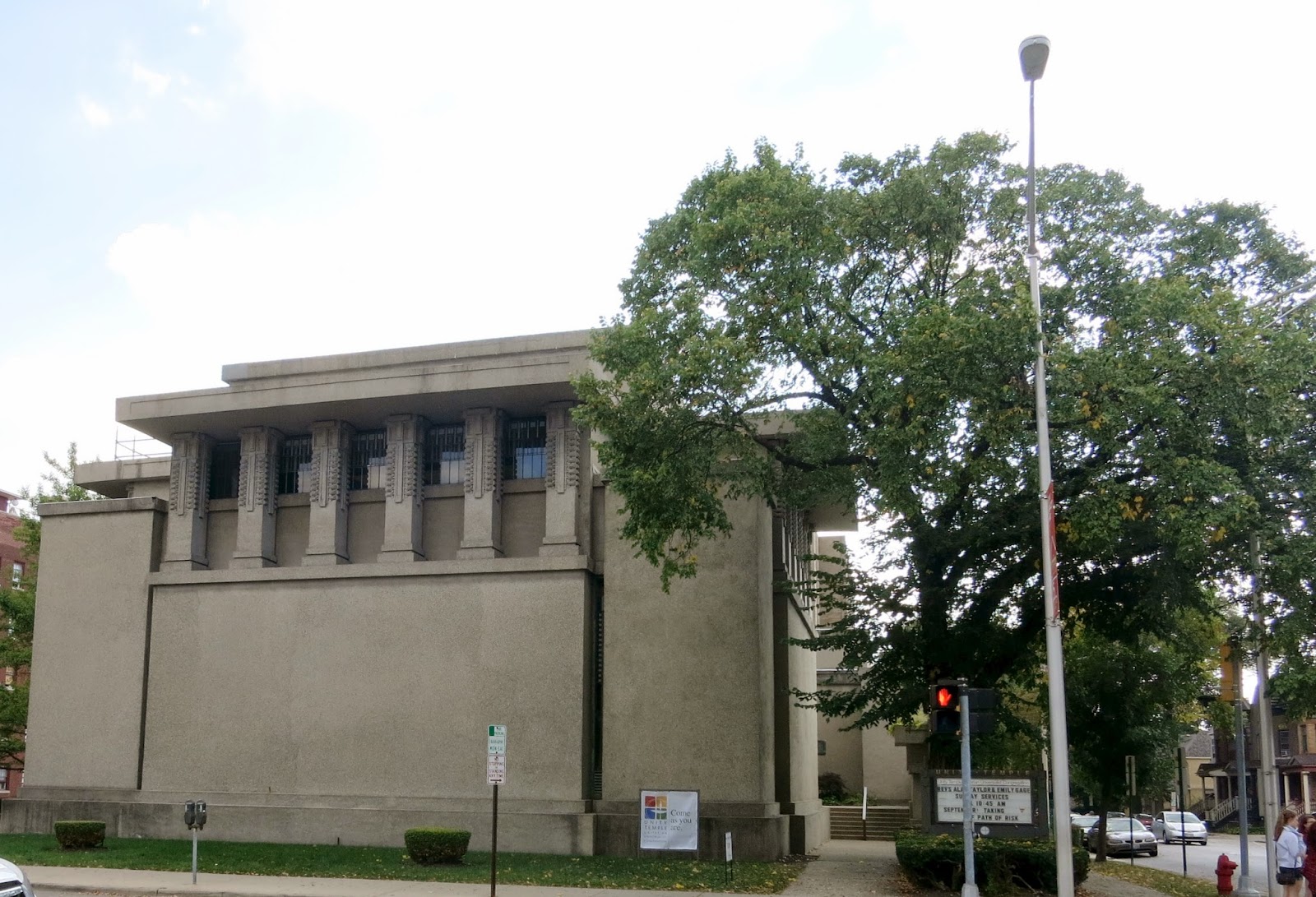


The Unity Temple *. Wright's mother was a member of this congregation.

After a week in Chicago we flew to Ottawa where, on Saturday morning of last week, I gave a workshop for teachers of the Ottawa Branch of the Sogetsu School on 'construction techniques' (using dowelling): photo below. 


After creating sculptures, the teachers added fresh material in the form of 'accordion leaves' (Molineria capitulata) only.


The example above was my demonstration piece. Below are three photos of work by some attendees. I must apologise for the poor quality of the pictures; I had the camera on the wrong setting.


The image above shows the only example of work created from 'dressed' timber. The ikebanist who created it explained that she had to carry her material on a bus and this was the easiest to transport. The result was a very contemporary look with a strong contrast between the fresh material and the sculpture.


The afternoon workshop, in which students also participated, was on the theme of 'colours in the same tonal range' or 'colours in contrast', using autumn materials. My demonstration work above, is an arrangement without kenzan using ash and some red leaves that I collected from the roadside. I really enjoyed giving the workshop for the Ottawa Branch members and was delighted with the enthusiastic engagement of the attendees. The idea for giving the workshop came from Leonora Duffield who, with her husband Richard, have been generous hosts to Laurie and me. We are most appreciative.

For more photos of our travels: Christopher and Laurie in North America *.


Greetings from Christopher in Ottawa,
(with apologies to J.R.R.Tolkien).

The sculpture is 'Maman' by Louise Bourgeois at the National Gallery of Canada.

* Click on the blue text for more information.


STORM KING

Our Australian friend, Brett, who lives in New York took us to the Storm King Art Centre  * two weeks ago. This is a large sculpture park about an hours drive north of the city. I was keen to go there to see an environmental art work by the British sculptor, Andy Goldsworthy. In my experience his work often appeals to Sogetsu ikebanists in particular. This project, made in 1997 - 1998, is called 'Running Wall' (Click on the blue text to see a really interesting article about it in American Scientist). There is a comment in the article stating that Goldsworthy's work is 'most alive' immediately it is finished, that is, just before it starts to decay. To me this is at the essence of ikebana, the transitory nature of our creations. Below are some photos I took of 'Running Wall'.


The next photo shows a large rugged sculpture that looked like a massive pile of slate.


It turned out to be small blocks of cypress covered in graphite. The texture was wonderful.


This sculpture, of metal tubes, had a great sense of movement. Only three of the tubes are anchored in the ground, the rest are supported by wires under tension.


It makes me wonder about trying the same technique with bamboo. 

Here are three photos I took of wild flowers in the park. I don't know what any of them are.


Actually the one above could be the dried head of 'Queen Anne's Lace' * (daucus carota).


I have seen a lot of the yellow flower in the photo above growing wild, and think it looks lovely, fresh and bright. So, I was delighted to find some in a vase of our Chicago apartment. I used it and some tan coloured chrysanthemum to create the ikebana below.


Greetings from Christopher
4th October 2014

Click on the blue text for further information. 

IN MEMORIUM: CARLYNE PATTERSON

Last week I was asked why this blog is named 'roadside ikebana'. At the time I began studying Sogetsu Ikebana in Melbourne (2001), I was driving into the countryside on a regular basis in the course of my work. On these trips my 'ikebana eyes' would often notice material growing by the side of the road that would be suitable for my next class, which I would then collect and put in the boot of my car. When my teacher would ask me 'What have you got there?' I would reply 'I am doing some roadside ikebana today'. Here I go again. In the first picture below are some 'ink berries' * (Phytolacca americana) that I saw growing through a hoarding at the edge of a Brooklyn footpath.


You will notice, in the photo above, that there are also some other grasses that have a pinkish tinge to the seed head. Although it doesn't show, further along the path is a miscanthus-looking reed that has a similar hue in the feathery flowerhead.


These are the roadside materials that I used for this arrangement that I created in a ceramic vessel I bought at the Guggenheim Museum in New York last week.


My first teacher in Australia was Carlyne Patterson, who died last week from Motor Neurone Disease. Below is a photo of my class in October 2004, with Carlyne on the right of the group. This was the occasion of the first exhibition of 'Ikebana at Qdos' in which we made ikebana in vessels created by Graeme Wilkie and his colleagues at the Qdos Gallery.


From left to right. Graeme Wilkie (ceramic artist), Philip Keon, Maria Hernandes y Jensen (ceramic artist), Sara Forsythe, Christine Theodorou, Annette MacKintosh, me and Carlyne Patterson.

Carlyne was a keen ikebanist and teacher until her illness prevented her practise only a few months ago. When I was her student she pushed me beyond my 'comfort zone' on many occasions and was renowned for her modern approach and frequent use of unconventional materials. She participated in the 50th anniversary exhibition of the Victorian Branch in May this year. The images below are of her directing and setting up at that exhibition.   


This work above is hers from the Qdos exhibition of 2005


The following year she created this out-door work using bark gathered from the sculpture garden, painted palm spathe and wire (faintly visible around the top of this large vessel). 


This very contemporary work, from a 2007 exhibition, was a collaborative piece by some of her students in which I think she was also a creative force.


Above is her last publicly shown ikebana work at the 50th Anniversary Exhibition of the Sogetsu School of Ikebana Victorian Branch.
Vale Carlyne and thank you.

Christopher 
27th September 2014

* Click on the blue text for further information.

New York, New York.

The view below is of the  lower Manhattan skyline, with the Brooklyn bridge in the foreground, taken from the Manhattan bridge. We arrived in New York last Monday evening.


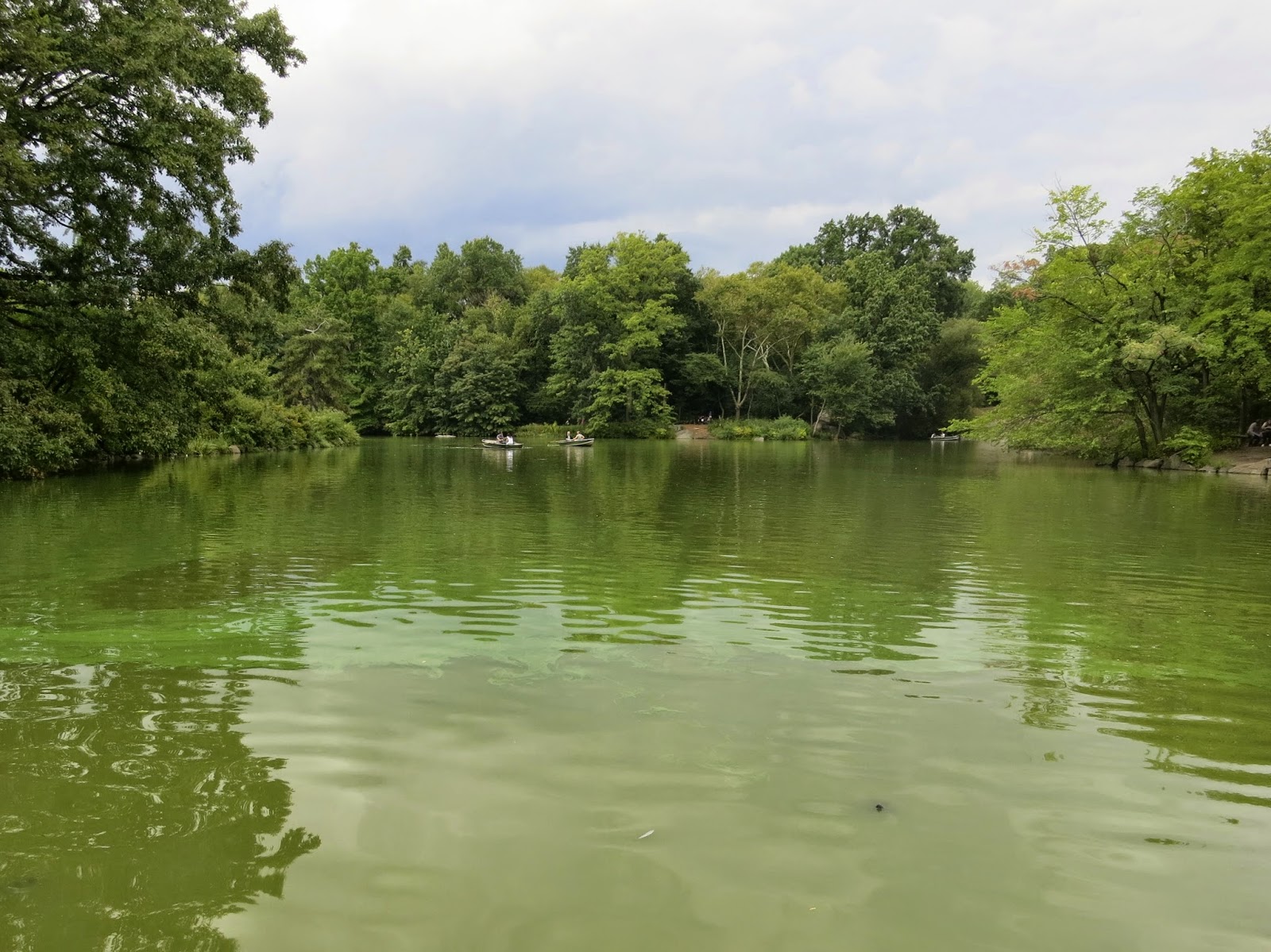
Our flight from Australia was long and somewhat exhausting. A gentle walk in Central Park was restorative. 


I certainly had not expected to see such a natural feature as these beautiful rocky outcrops.


We took this walk after our first engagement on Tuesday in New York, which was luncheon at the Nippon Club and a demonstration by Ms Nobu Kurashige * , Head Ikenobo Professor and Managing Director of Ikenobo North American Headquarters.  


Here are some of the elegant works she created.


The next photo shows some of the attendees viewing the ikebana after the luncheon. 


On the next day Laurie and I visited the Frick Collection. To me, a little slice of Europe, in an exquisite house museum overlooking Central Park. The quite amazing collection included portraits by Holbein of Thomas Moore and Thomas Cromwell * . The life of the latter is the subject of two recent books by Hilary Mantel.


( * Click on the blue text for further information)

Greetings from Christopher
in New York.

20th September 2014

OUT OF SEASON HYDRANGEA

About six months ago, at the beginning of autumn, a newly potted hydrangea in the garden suddenly produced a single flower. It grew slowly over winter and I was waiting for it to develop some autumn colour. Although the leaves have gone a satisfying bronze colour, with the very cold winter nights the flower only developed a few spots of pink.


I finally decided I had to pick the flower before going on holidays, in case it withered while were are away. The flecks of pink made me think it would go well in this beautiful red-splashed ceramic bottle by Barry Singleton * . It hardly seemed to need to be arranged. However, I did do some careful pruning, leaving only one of the leaves to counterbalance the large flower.


In this second arrangement I have used some bright pink ranunculus * that I had used in a class-room demonstration. Here I have re-used them with two leaf stems from a strelitzia in a white ceramic vase. I was interested to learn that these flowers are in the same family as buttercups and have toxins that may cause dermatitis if handled too much. Take care.  


* Click blue text for further information

Greetings from Christopher
14th September 2014

WINTER/SPRING transition time = SPRINTER

Last week I commented on the beautiful warm sunny afternoons we had been enjoying in the previous week. Two days later, on the official first day of Spring, September 1st - according to Australian practice, we had a whole day of rain and cold winds. So, I was interested when my brother sent a link to an article by the Director of the Melbourne Royal Botanic Gardens, Dr Tim Entwisle, who proposes that we learn from the aboriginal view of the seasons * ( You may need to scroll down to find the article posted 31st August). In our area of Australia five seasons were recognised by those who lived here before European settlement. In the west of our state, about three hours drive from where we live, six seasons were identified according to the Bureau of Meterology Indigenous Weather Knowledge * project.

Below are some additional wildflowers that I had photographed last week in Iron Bark Basin. The first two are of 'Green Hood' * ground orchids, members of the Pterostylis genus.


The next is a 'running postman' flower, kennedia prostrata *.


Speaking of seasons, in two weeks I will make a sudden change from Spring ('Sprinter' as proposed by Dr Entwisle) to Autumn as I will be  in North America. Expect a different look.

Last weekend I attended a Sogetsu Ikebana, Victorian Branch, workshop on the theme of 'A Random Encounter' *. Many more photos are on the 'recent workshops' tab of the Victorian Branch website. Below is a photo of my example followed by a re-working of the exercise I did later at home with different floral material. An explanation of 'random encounter' is given on the Sogetsu Victorian Branch website.


Greetings from Christopher
7th September 2014

* Click on the blue text for more information